Autonomous Systems 1
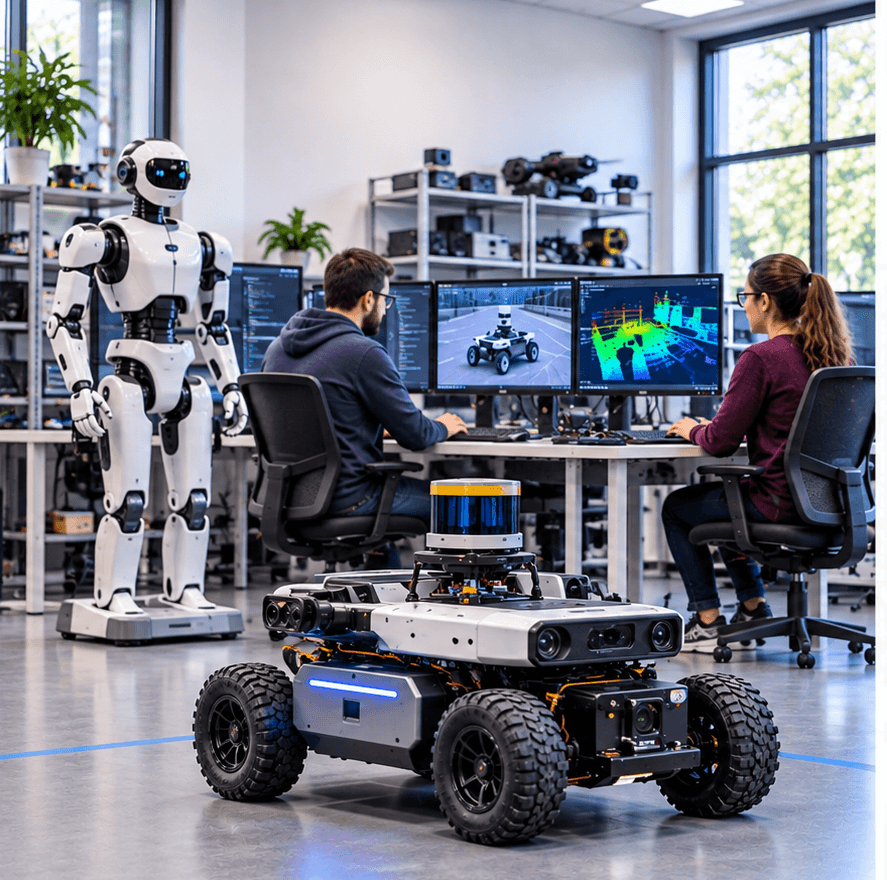
The Autonomous Systems laboratory focuses on the research and development of intelligent autonomous systems using advanced AI techniques. Its activities include mobile robotics, autonomous navigation, computer vision, environment perception, object detection, semantic segmentation, and intelligent decision-making. The laboratory explores AI-driven solutions for autonomous robots and unmanned aerial vehicles (UAVs), combining machine learning, sensor fusion, and real-time data processing to develop systems capable of perceiving, understanding, and interacting autonomously with complex environments.

Sergiu Nedevschi
Research Conducted in this Laboratory

HRIA - Romanian HUB for AI
The goal to establish and operationalize the Romanian Hub for Artificial Intelligence (HRIA) for research, development, and innovation in the field of Artificial Intelligence (AI), by developing an attractive and competitive research ecosystem that brings together the efforts of the academic and business environments, with the aim of producing original scientific research, transferring research results to industry and society, developing new products and services, and generating a core of knowledge and development in Artificial Intelligence integrated into the European Research Area (ERA).
EURODRIVES
UTCN advances next-generation automotive electronics and intelligent systems with low-power embedded platforms, computer vision for environment understanding (panoptic video segmentation and depth estimation), emerging microelectronics technologies, multi-physics analysis of automotive electronics, integrated circuit design for driver assistance, and hardware-software co-design validated through novel test platforms and procedures.
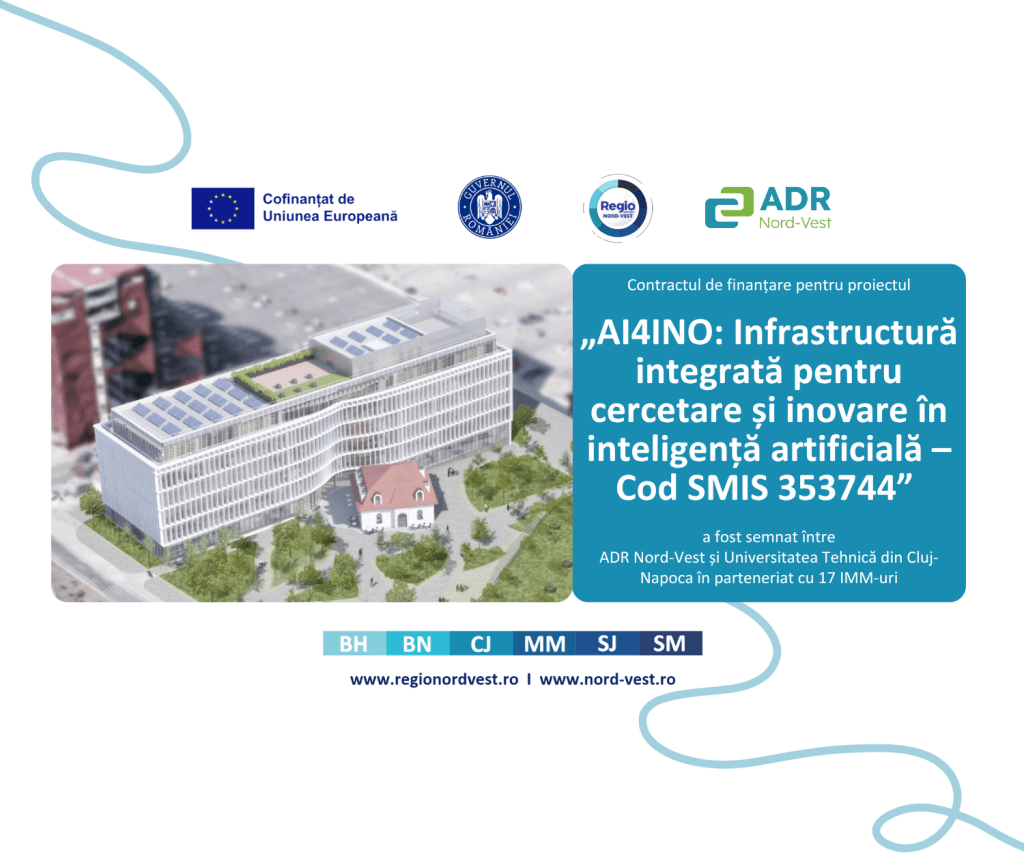
AI4INO: Integrated infrastructure for research and innovation in AI
AI4INO aims to develop an integrated regional research-development-innovation infrastructure dedicated to the testing, validation, and adoption of Artificial Intelligence (AI) technologies, conceived as a reference hub for collaboration among academia, the private sector, and public authorities in the North-West Region. The infrastructure will be oriented toward supporting AI-based applications with an immediate and visible impact on society and toward stimulating innovation processes in strategic fields, in line with smart specialization priorities and with the objectives of the National Strategy for Research, Innovation and Smart Specialisation 2022-2027, as well as the specific objectives of the North-West Regional Smart Specialisation Strategy (RIS3 N-V) 2021-2027.


